The Vibecession
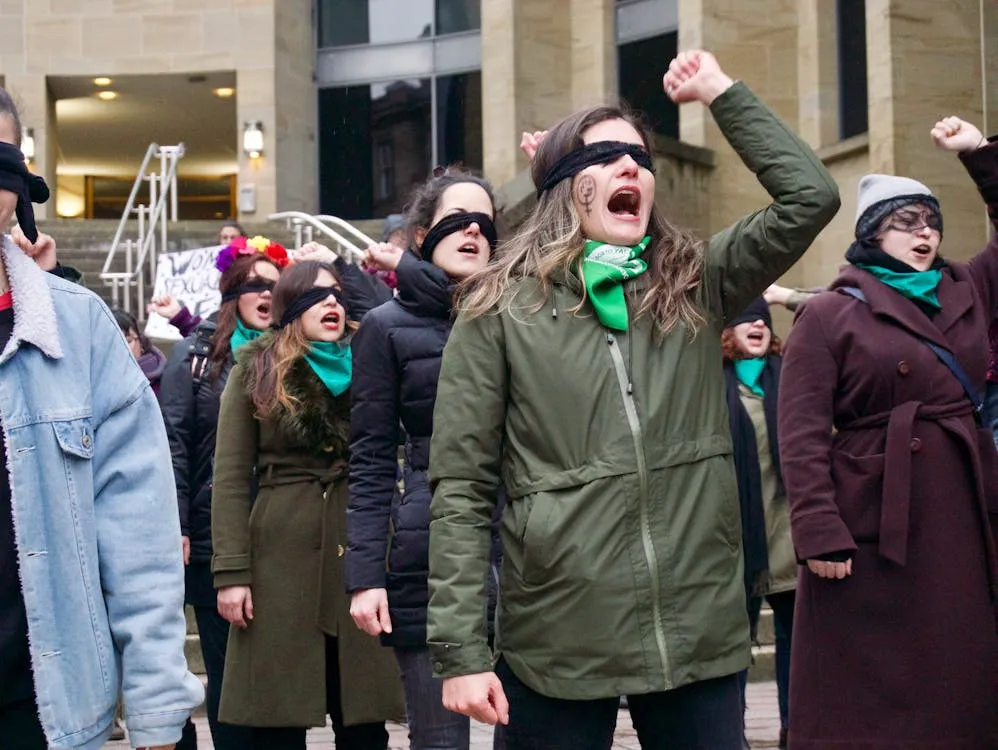
The numbers go up and the vibes go down. That gap — between what the indicators say and what people report feeling — is the whole force, and it is the reason this one behaves differently from everything else Synthesis tracks.
The force runs at low momentum and high volatility, the inverse of the ageing, climate and wellness forces. There is no clean directional signal here. What there is instead is variance: sharp swings, contested measurement, and a persistent disagreement between aggregate data and lived experience. That combination is genuinely harder to plan against than a steady trend.
The vibecession
Rising living costs and inflation strain disposable income even as headline metrics suggest growth. Policy uncertainty stays high and consumer confidence lags behind the data.
The tracked drivers make the point almost too neatly. Inflation is up just 0.2% since 2016 and Consumer Confidence is down 0.2% over the same period — both effectively flat. Yet the behavioural evidence is anything but. WWD reports department store growth stalling and names the vibecession directly as a cause. Food Dive finds grocery shoppers trading down to lower-priced retailers. Morning Brew captures the mood in a single observation: even staying home is getting more expensive. Amazon has launched Bazaar, a standalone low-price shopping app, across more than a dozen markets — infrastructure built for a downtrading consumer.
Gen Z sits at the centre of the contradiction. The Wall Street Journal reports that Gen Z shoppers are not spending the way retailers need them to, while Fortune documents the same cohort spending hundreds a month on “treat culture” and justifying it through the difficulty of daily life. Both are true. Discretionary spending is not falling so much as relocating toward small compensations.
The US Bureau of Labor Statistics Consumer Price Index release remains the reference point that the vibecession thesis is, in effect, arguing against.
A struggling middle class
Systems are becoming precarious. Gig work replaces stable employment, worker protections erode, and ageing populations exert pressure that squeezes economic resilience.
This is where the data does move. The Gig Economy driver is up 23.4% since 2016, by far the largest movement in this force and one of the largest Synthesis tracks anywhere. Set against flat inflation and flat confidence, the restructuring of work is the thing actually happening.
Pew Research has traced how the American middle class has changed across five decades, and the distributional picture is sharpening elsewhere: Oxfam is calling for new taxes on the super-rich after finding the top 1% captured two-thirds of new wealth. Wealth Concentration, Disposable Income and Trust in Public Institutions all sit behind this force as qualitative drivers, and the third is arguably the load-bearing one — the vibecession is at heart a crisis of belief in measurement.
Household adaptation is visible. Business Insider links a higher cost of living directly to the rise in multigenerational homes, and Care.com’s sandwich generation report documents the unpaid labour absorbing what formal systems no longer carry. The Old-Age Dependency Ratio driver ties this force to the demographic pressure mapped in Mosaic Populations.
National development paths
Development trajectories are diverging. Technology and trade propel some nations while others stagnate amid climate disaster, conflict and poverty traps.
The near-term risk is geopolitical. The Guardian asks directly whether war in the Middle East could trigger a global economic crisis, and reports US strikes on an oil tanker in the Strait of Hormuz alongside strikes in Tehran. Asia Times describes the Iran conflict pushing India toward the edge of a currency crisis. Bloomberg reports markets betting on a ceasefire extension — a wager, not a forecast. Bloomberg also flags the aluminium market entering a prolonged supply black hole, the kind of input constraint that propagates quietly through everything downstream.
Divergence cuts both ways. New Zealand and India have signed a free-trade deal. Bloomberg examines why global businesses are doubling down on Dubai. BRICS expansion signals growing interest from the Global South, and at the World Peace Forum Mushahid Hussain argued the Global South should lead the emerging order. Zerodha poses the sharper version of the question: will India grow old before it gets rich? The Asian Development Bank’s April 2026 outlook is the standing reference for how that resolves.
WACC’s work on digital colonialism supplies the counter-argument — that AI infrastructure may reproduce extractive patterns rather than dissolve them, in which case divergence widens rather than closes.
Three shifts to expect
Earning a living becomes a dynamic mix of roles rather than a single job. Income turns fluid as people move between types of work. Stability gives way to the ability to adapt and reconfigure how value is created. World Bank unemployment data — the share of the labour force not working but actively seeking it — is the tracked proxy, rated medium uncertainty and consistent rate of change across 2015 to 2025. It is worth noting the proxy measures job-seeking, not income security, which is precisely the gap this shift describes.
Ageing populations force a redefinition of responsibility between generations. Who owes what to whom, and through which institution, stops being settled.
Stress becomes a persistent condition that shapes how people live and decide. Not an episode to recover from but a background state that changes decision-making itself.
What to watch
McKinsey’s work on agentic commerce points to AI agents restructuring how purchasing decisions get made, which would alter the relationship between price sensitivity and behaviour that this force rests on.
For frameworks rather than signals, the post-capitalist literature is unusually active: the Journal of Futures Studies on economics after corporate capitalism, Springer Nature on simulating post-capitalist utopias, and Sohail Inayatullah’s four futures of present humanity via the P2P Foundation. Singapore’s Centre for Strategic Futures has published a glossary for other worlds. When the existing vocabulary stops describing what people are experiencing, new vocabulary is generally the first thing to arrive.
Nine drivers sit behind this force. Three carry movement figures; wealth concentration, unemployment rate, political stability, trust in public institutions, old-age dependency ratio and disposable income are tracked qualitatively.