INSIGHT: People don't need convincing: the moment a decision feels low-stakes or the cognitive load gets high enough, they cede control. But the stakes vary sharply by category and by who's choosing.
EXPERIENCE THE DATA: We tested this from the moment guests arrived. Choice was taken away from guests with drinks predetermined to match their health goals and taste, served in identical glasses.
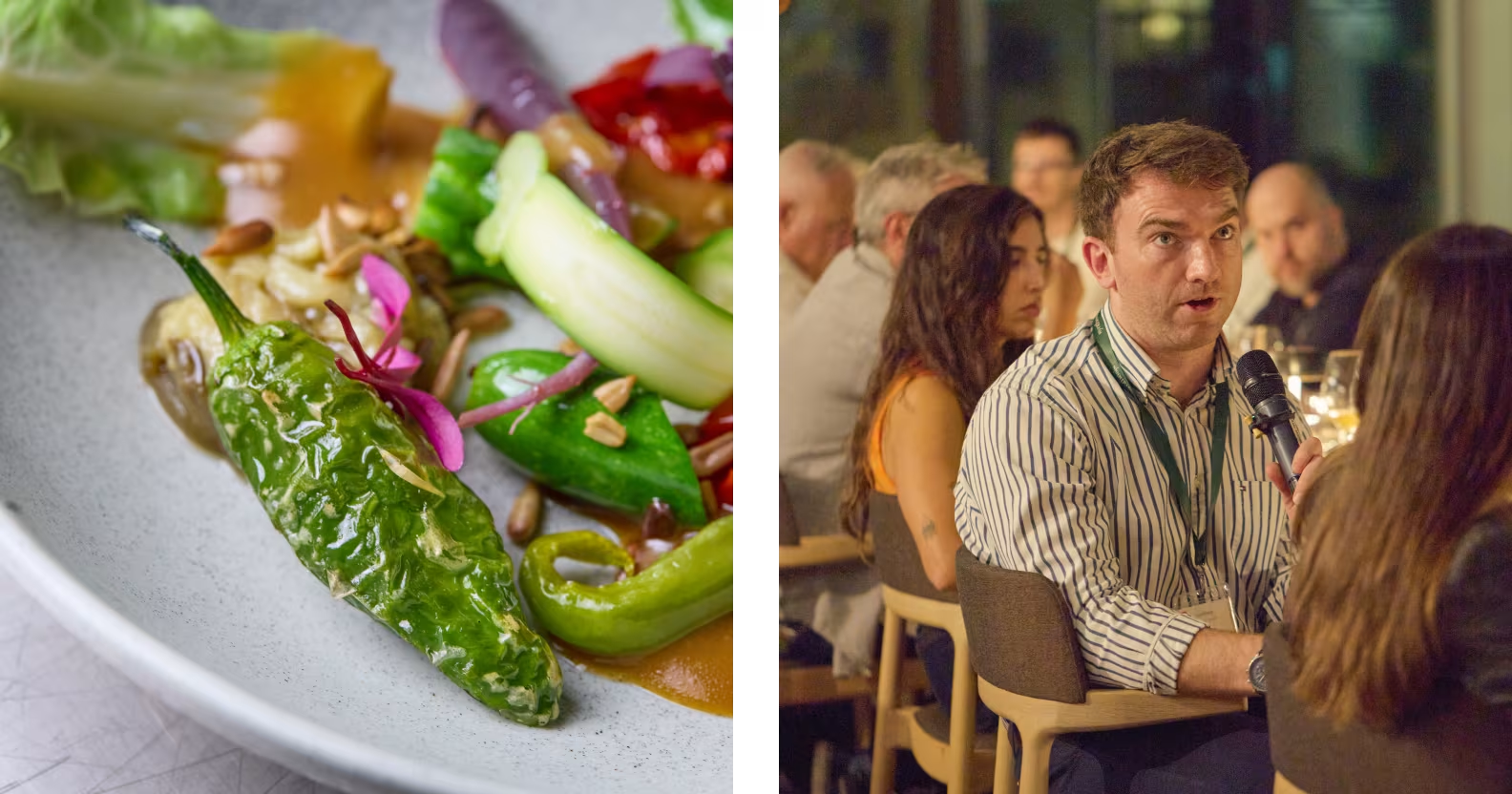
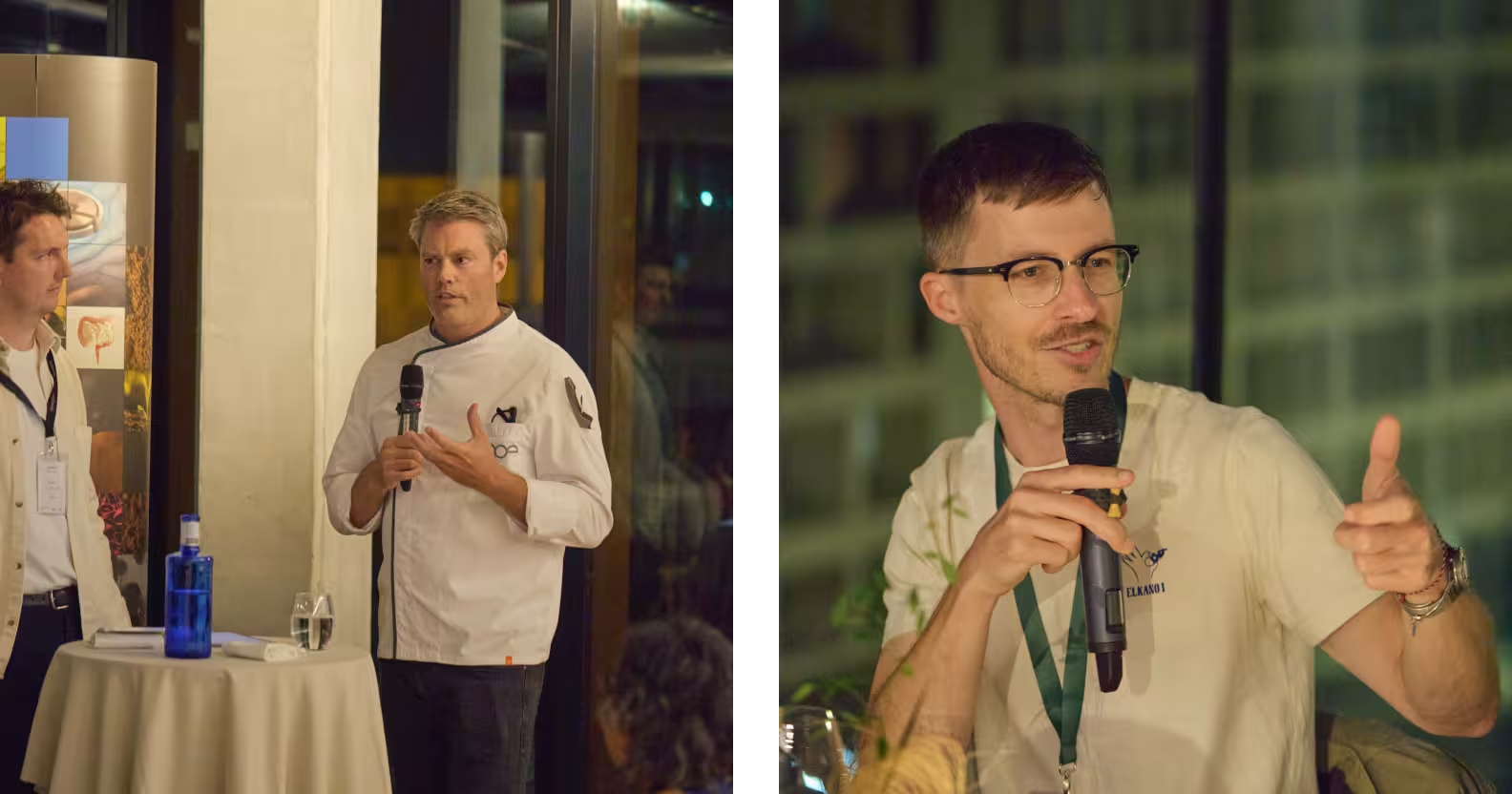
For the opening pintxos, guests could choose between human chef John and "Chef Poly", our AI-in-residence. Over half chose Poly.
The Autopilot course went further: AI designed the whole table's dish from the room's collective preferences. No one pushed back, even though the preferences in the room varied: seasonal/local for almost everyone, gut health for half, planetary impact and fibre for a third each, and straight convenience for a vocal minority of eight.
The extent to which we cede decisions to AI will vary further by demand spaces: Functional demand spaces ("nutritious breakfast") lean towards letting AI decide; identity-driven ones (coffee, craft beer) don't.
Nor is it even by age. Adults under 30 are far more likely than the general population to say they turn to AI because they can't afford or access traditional care (29% and 38%, versus 19% and 18% overall; KFF Tracking Poll, March 2026). Already, every week, more than 300 million people turn to ChatGPT with health-related questions. A connected home, agentic shoppers and the future of trust will disrupt this even further
Gregory Staff, R&D Scientist in Kerry's Global Taste Innovation & Application team, shared that businesses need to prepare for "How much do we give away, and how much control do we take over?"
QUESTION TO ASK US:Which demand spaces will be most susceptible to AI-driven choice? Which cohorts are ceding control by choice, and which by necessity?
2. Choice survives as a guilty pleasure.
INSIGHT: AI curation is becoming default, choosing for yourself an indulgence. Categories loaded with identity will allow consumers to indulge in discovery and curation, savouring expertise, provenance and storytelling. Brands wishing to play in this future need to provide expertise in the form of credible human alternatives to the machine and know where to dial up convenience versus pleasure.
EXPERIENCE THE DATA: Curated by Me handed control back. Chef John's Koji-Cured Duck Pastrami arrived as a base, and guests personalised with boosts for gut health, sleep or longevity.
Adeline Gautier, Culinary Trend Manager for The Menu at Kraft Heinz, found the AI-designed course lacking the complexity of the human chef's: "The best choice is when I combine AI and human expertise. Not only curated for me or only curated by me… the two combined together can be powerful, with a moral compass."
Another guest agreed: "We should start to admit creativity can co-live with very curated-for-me gastronomy, so we should widen our offer."
It's already in market: over half of Gen Z have invited someone to dinner specifically for their expertise (the "Table Captain" phenomenon). When people take a decision back, they often hand it to a trusted human rather than make it alone.
QUESTION TO ASK US:Where won't your customers outsource the decision? Which of your demand spaces sit in the blend, and would you know if they were shifting?
3. Before you win the consumer, you have to win the machine.
INSIGHT: The first audience for your product is a model, not a person. A claim built to reassure a shopper reading a label means nothing to an algorithm deciding whether that product is surfaced at all, and a product that isn't surfaced is never considered. Winning the machine means making your product legible to it: structured data, with verifiable, differentiated claims The future of channel transforms the relationship between brands, retailers and the customer they used to share.
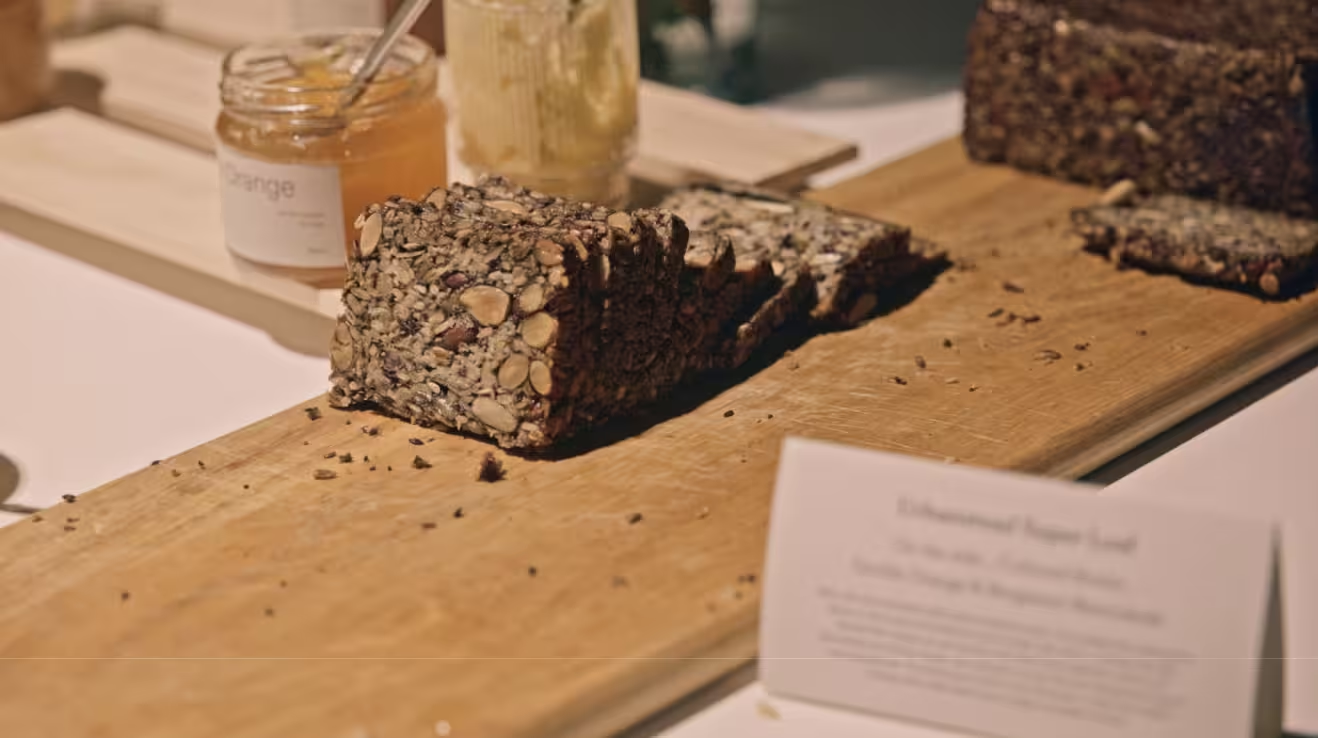
EXPERIENCE THE DATA: One guest, from bakery supplier OKIN, told us AI assistants simply don't recommend bread when asked what to eat for the week. The “excluded set” problem is emerging everywhere: Instacart's AI tags 1.3 billion data points across half a million products to decide what a shopper sees, with no "we removed 47 products" disclosure.
The retailers in the room saw the bigger structural risk. As Unai Sardón, Corporate Venturing & Open Innovation Manager at Spanish grocery retailer Eroski, put it: "If people are delegating decisions to an AI, there is some sort of disruption between the customer and the retailer, because someone is taking the decisions on behalf of the customer."
QUESTION TO ASK US:Who's teaching the algorithm what "healthy", "quality" or "trustworthy" means for your category? How will you know whether your product is even in the visible set in 2030? Do you have a team in place proactively shaping and reacting to the change?
4. AI will become our willpower, or our weakness.
INSIGHT: AI is starting to do for food what GLP-1s already do chemically: acting as external willpower. But the same technology can just as easily be built to exploit impulse rather than protect against it. The difference is a design and incentive choice.
Laura Guerrini, Project Manager in Lavazza's Innovation & Experience team, asked: "In a world where choices are driven by AI and made by AI, what place do we leave to pleasure"
EXPERIENCE THE DATA: The clearest articulation of this tension didn't come from a guest in the room. It came from a story Lee told, from the Korean neuroscientist and AI expert Kim Dae-sik: an AI blocking an 11pm fried-chicken order "for your own good", has the potential to turn us into "permanent children".
Households on GLP-1s cut grocery spending by an average of 5.3% within six months of starting the medication, rising to over 8% for higher-income households, driven largely by a roughly 10% decline in savoury snacks (Cornell, Journal of Marketing Research, December 2025).
The AI-native version of the same mechanism is already live, and cuts both ways. The UK Gambling Commission now requires operators to run algorithmic detection for at-risk players; Mindway AI's tool is independently validated at catching 87% of at-risk and problem-gambling cases before they escalate. But an NYT investigation this September found DraftKings had built near-identical behavioural scoring not to protect vulnerable users, but to target them with the promotions most likely to keep them losing, $400 million worth in 2025 alone. Same signals, opposite design choice.
QUESTION TO ASK US:When agentic commerce does the shopping, how will it treat impulse categories versus planned ones, and healthy products versus indulgent ones?
Sources for this section: Sylvia Hristakeva, "The No-Hunger Games", Journal of Marketing Research, 18 Dec 2025 (Cornell/Numerator, ~150,000 households); UK Gambling Commission Licence Conditions and Codes of Practice, effective March 2026, and Mindway AI/Gaming Laboratories International validation; New York Times investigation into DraftKings, 19 Sept 2026.
5. Scarcity doesn't ask who's in charge.
INSIGHT: It doesn't matter whether it's AI or a person doing the choosing. If the planet is no longer able to supply the ingredients, choice erodes regardless. When constraint is certain, culinary creativity matters.
EXPERIENCE THE DATA: For the final savoury course, chef John designed for planetary constraint rather than preference: cod kokotxa with pil-pil. A dessert made from usually discarded byproducts also followed.
The week of the event, the UN Environment Programme concluded that limiting warming to 1.5°C is no longer realistic. Tellingly, constraint was the one topic that got the whole table talking together, wherever people stood on AI versus personal choice.
It's already on shelf, not just on the menu. Regulation is starting to put carbon emissions on pack. Hybrid plant-dairy products are emerging from supply constraint, helped by a consumer backlash against plant-based being "too processed".
Rémi Lefebvre, who leads Development at Hyatt Hotels and Resorts, named the byproducts dessert his favourite dish of the night: "reusing byproducts to make something is something I personally love to do." A note to a future self added a twist we hadn't designed for: "What about how much water AI needs?" The machine doing the choosing has its own planetary footprint.
QUESTION TO ASK US:What happens to your portfolio when constraint, not choice, sets the menu?
Explore our Futures platform
We collect all of these signals, plus hundreds of others, in our Synthesis Futures platform.
Thanks, we'll be in touch soon to give you access to the platform.
Sorry, something went wrong. Please try again or email us directly at hello@synthesis.partners if this persists