When the grocery store knows more about your body than your doctor
By Nandhini
April 30, 2026
Access
The median consumer is a poor proxy for anyone. Personalised nutrition is leaving the clinic, and the brands still formulating for "everyone" are running out of shelf space.
Next generation food and nutrition companies are increasing access to personalized health by bringing it out of clinical settings and bringing it closer to consumers (e.g. grocery store). Across Singapore, the United States, and the United Kingdom, nutrition in food is moving beyond basic adequacy to deliver precision, personalization, and performance once reserved for clinics, specialist consultations, and elite athletic programs.
Field Signals
Field Signal #1 — Unity Pharmacy × FairPrice Finest, Singapore: The Grocery Aisle as Consultation
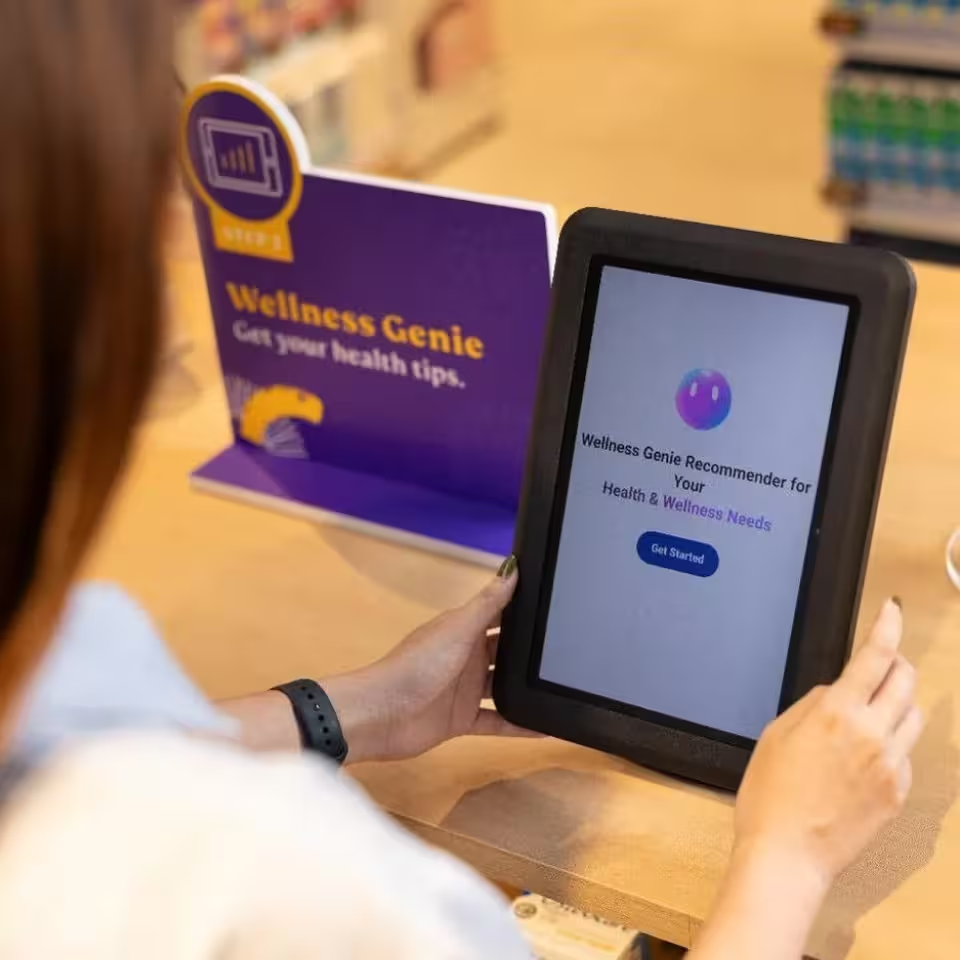
Wellness Genie, Unity Pharmacy's AI-powered in-store kiosk at FairPrice Finest Punggol Digital District, is transforming everyday grocery runs into personal health consultations. Shoppers step onto a Tanita body composition analyser, receive personalised supplement recommendations, and get a digital map pointing to where those products sit in-store.
Field Signal #2 Tangelo, USA: Medically Tailored, Publicly Funded
Tangelo delivers medically tailored meals, groceries, and nutrition education to individuals with diet-related chronic conditions, at no cost to Medicaid members. This is precision nutrition funded as public health. Members report an average weight loss of 11.5 lbs and a roughly 30% reduction in risk of serious health complications. The model reframes personalised food as a cost the healthcare system can no longer afford to ignore.
Field Signal #3 MENA, UK: Nutrition Targeting Specific Health Cohorts
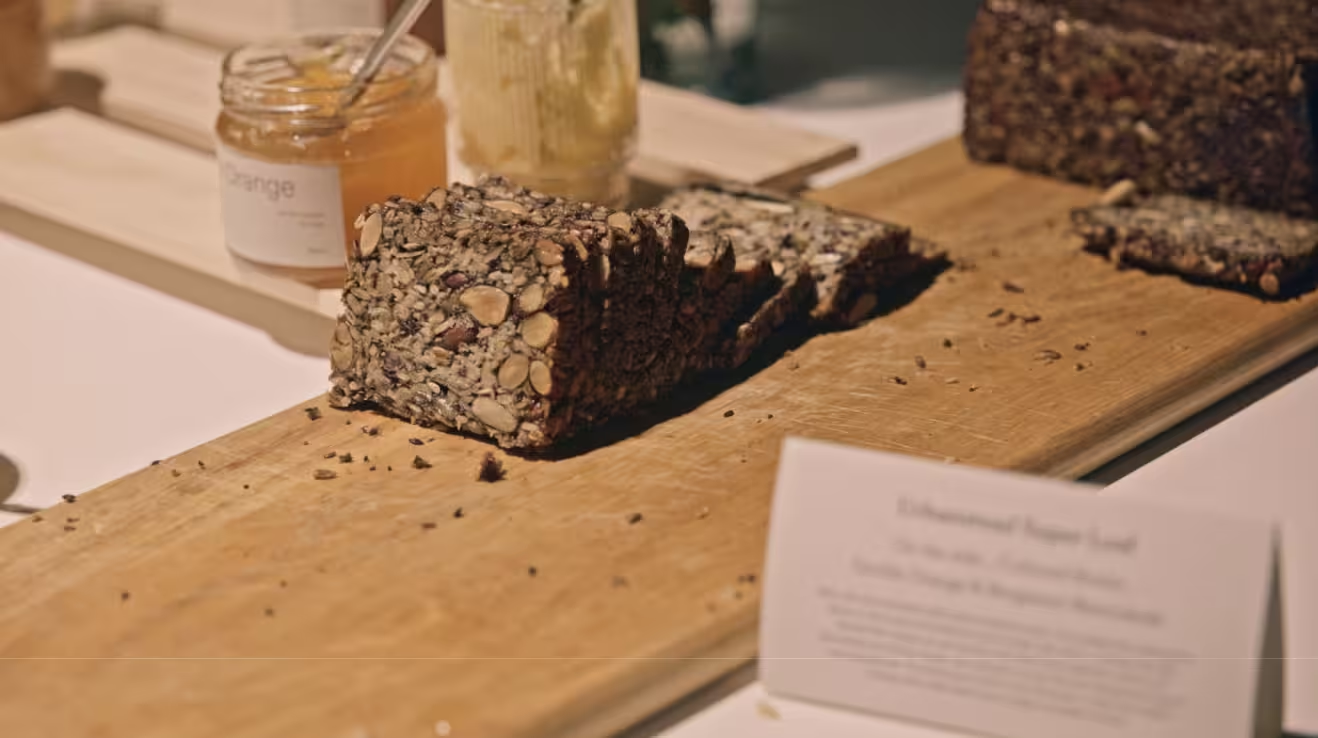
MENA's protein bars and muesli are formulated with plant oestrogens and botanicals to ease peri-menopause and menopause symptoms. Starting at £22.50 per pack with a subscription option, the products target a health cohort that mainstream nutrition has largely overlooked. MENA's proposition affects half the population, improves access for women who may not have easy access to specialist menopause care.
What’s Next?
These signals point in the same direction. Personalised nutrition is shedding its clinical framing and becoming an expectation built into the places, payment systems, and product formats of people’s everyday routines.
That shift raises a harder question for incumbent brands. When a kiosk can body-scan a shopper and direct them to the right product in-aisle, when a Medicaid programme can prescribe a tailored meal plan, when a protein bar can be formulated for a specific hormonal profile — the definition of "good for you" on a pack starts to look vague. Generic wellness claims built for no one in particular face a shelf increasingly populated by products built for someone specific.
The brands that will need to move fastest are the ones currently selling "health" as a broader positioning rather than a specific, verifiable claim. As AI-powered nutrition agents begin mediating purchase decisions: scanning labels, cross-referencing health data, recommending against products that can't substantiate their claims, the readability becomes a competitive requirement.
What happens to the wellness aisle when the shelf knows more about the shopper than the brand does?
Explore our Futures platform
We collect all of these signals, plus hundreds of others, in our Synthesis Futures platform.
Thanks, we'll be in touch soon to give you access to the platform.
Sorry, something went wrong. Please try again or email us directly at hello@synthesis.partners if this persists